
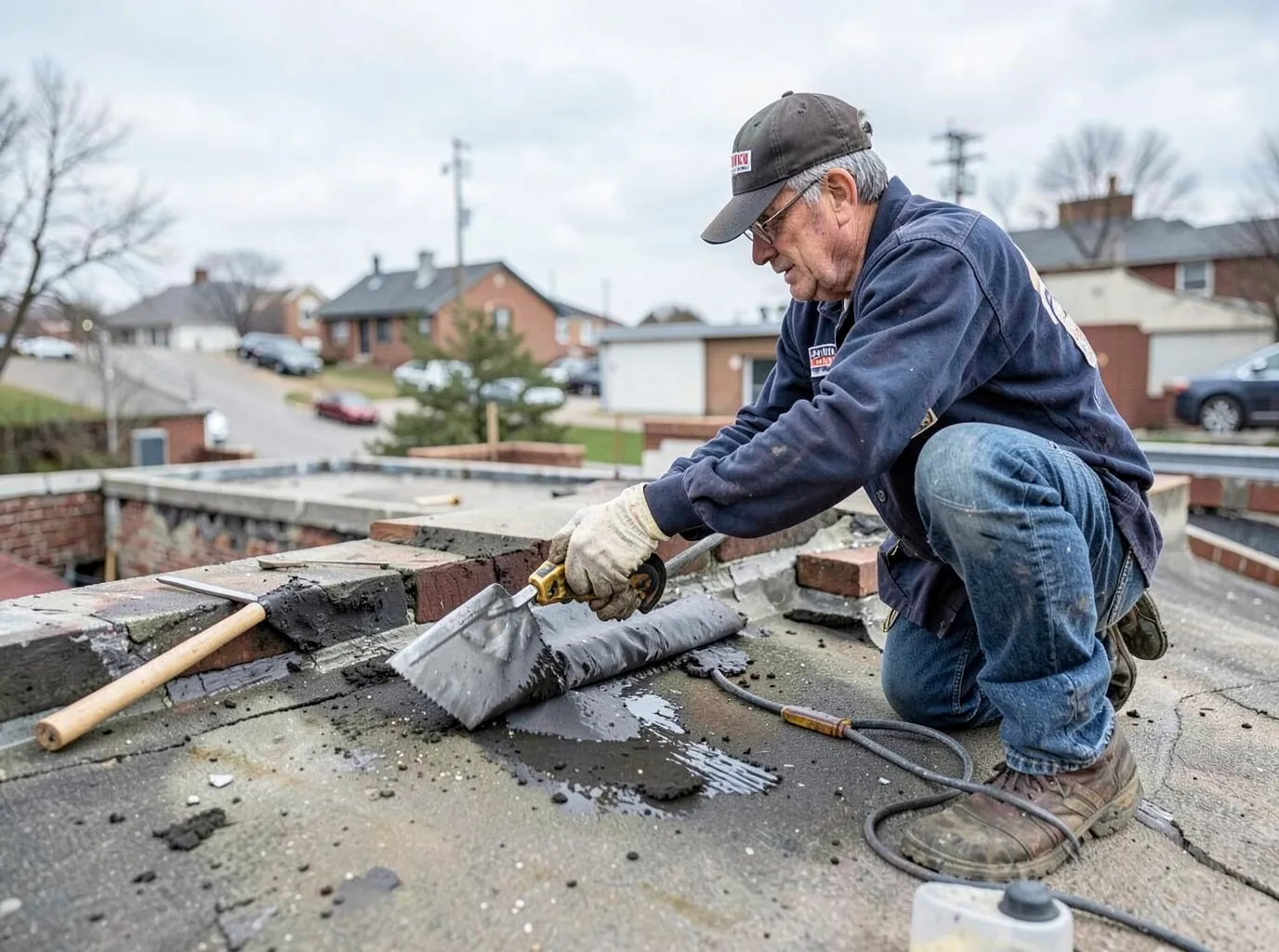
Sioux City’s humid continental climate brings heavy spring rains and winter ice dams that push water under shingles on older homes in Morningside and Northside. Many houses built before 1960 have layered asphalt shingles and outdated flashing around chimneys and valleys, so leaks often appear first near the Lewis and Clark Interpretive Center corridor where wind-driven rain hits hardest. We carry emergency tarps, ice picks, and heat tape on every truck to stop active water intrusion before it reaches plaster ceilings in Leeds and Indian Hills.
When a call comes from Riverside or Grandview Park after a thunderstorm, we start by tracing water stains in the attic rather than assuming the obvious hole. Cold winters here cause repeated freeze-thaw cycles that crack step flashing along the Missouri River bluff homes, and summer heat softens sealant on vent boots. We document every penetration we touch so homeowners in South Sioux City or Dakota City can show insurance adjusters exactly what was damaged versus pre-existing wear.
Woodbury County building practices still allow certain older underlayment materials that fail faster than modern synthetics, so we always check the decking condition before any patch. North Sioux City properties near the river see higher humidity that promotes rot around skylights we repair weekly. Our crews work within the posted hours and leave written notes on every temporary fix so the owner knows what permanent work is needed once weather allows.
Technician insight
In Sioux City the thing that catches most people out with Emergency Roof Leak Repair is how quickly ice dams on pre-1970 homes in Morningside and Leeds push water under three layers of old shingles once temperatures swing above freezing. Homeowners often think the leak is fixed after we tarp it, but the real issue is the rotted decking we find two feet inside the wall plate when we finally get up there in spring.
Ice Dam Leak on Morningside Two-Story
A homeowner in Morningside called after water stained the upstairs ceiling following a January thaw. We found an ice dam along the north valley that had forced water under three layers of shingles and into the soffit. Crew removed the ice, installed heat tape, and sealed the valley flashing the same afternoon. No further interior damage occurred once temperatures dropped again.
Emergency Roof Leak Repair Services We Offer
✓Ice Dam Leak Patching
Remove ice dams and install heat tape plus new flashing on homes in Morningside and Northside where repeated freeze cycles force water under shingles.
✓Storm Damage Emergency Tarp and Repair
Secure damaged sections after high winds or hail and replace missing shingles on Leeds and Riverside roofs before the next rain reaches Woodbury County.
✓Chimney and Valley Flashing Repair
Replace corroded step flashing around chimneys and valleys on older Indian Hills homes where wind-driven rain from the Missouri River commonly enters.
✓Attic Leak Tracing and Temporary Seal
Locate active leaks through insulation in Grandview Park houses and apply targeted sealant until full roof work can be scheduled.
✓Vent Boot and Skylight Leak Fix
Replace cracked rubber boots and reseal skylight curbs on South Sioux City and Dakota City homes before summer heat accelerates deterioration.
Emergency Roof Leak Repair Cost in Sioux City, IA
| Service | Typical Range | What Affects It |
|---|---|---|
| Emergency Tarp and Seal | $250–$550 | Size of damaged section and roof pitch affect labor time. |
| Ice Dam Removal and Heat Tape | $400–$850 | Number of linear feet and whether new flashing is needed. |
| Flashing or Vent Boot Replacement | $300–$650 | Access difficulty on two-story homes in bluff neighborhoods. |
| Full Section Shingle Repair | $600–$1,200 | Includes underlayment check and disposal of old material. |
Ranges are typical for Sioux City, IA and confirmed with an exact written quote before any work starts.
How it works
- 1
Phone Assessment
We ask about recent weather, neighborhood, and visible water stains to decide if the job needs same-day response in Sioux City or nearby cities.
- 2
On-Site Inspection
Crew checks attic, exterior penetrations, and ice or debris conditions on the roof while documenting everything for the homeowner.
- 3
Temporary Stoppage
Apply tarp, remove ice dams, or seal active entry points so water no longer reaches interior ceilings or walls.
- 4
Permanent Recommendation
Provide written scope for full repair once weather stabilizes, including any decking or underlayment issues found in Woodbury County homes.
Pricing
Most emergency calls fall between a quick tarp and a full section repair; final price depends on roof access, extent of active water, and whether ice dams or storm damage are present.